- Visit
-
- Program
-
- Education
-
-
Next Event
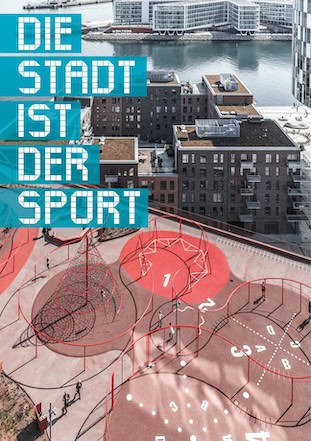
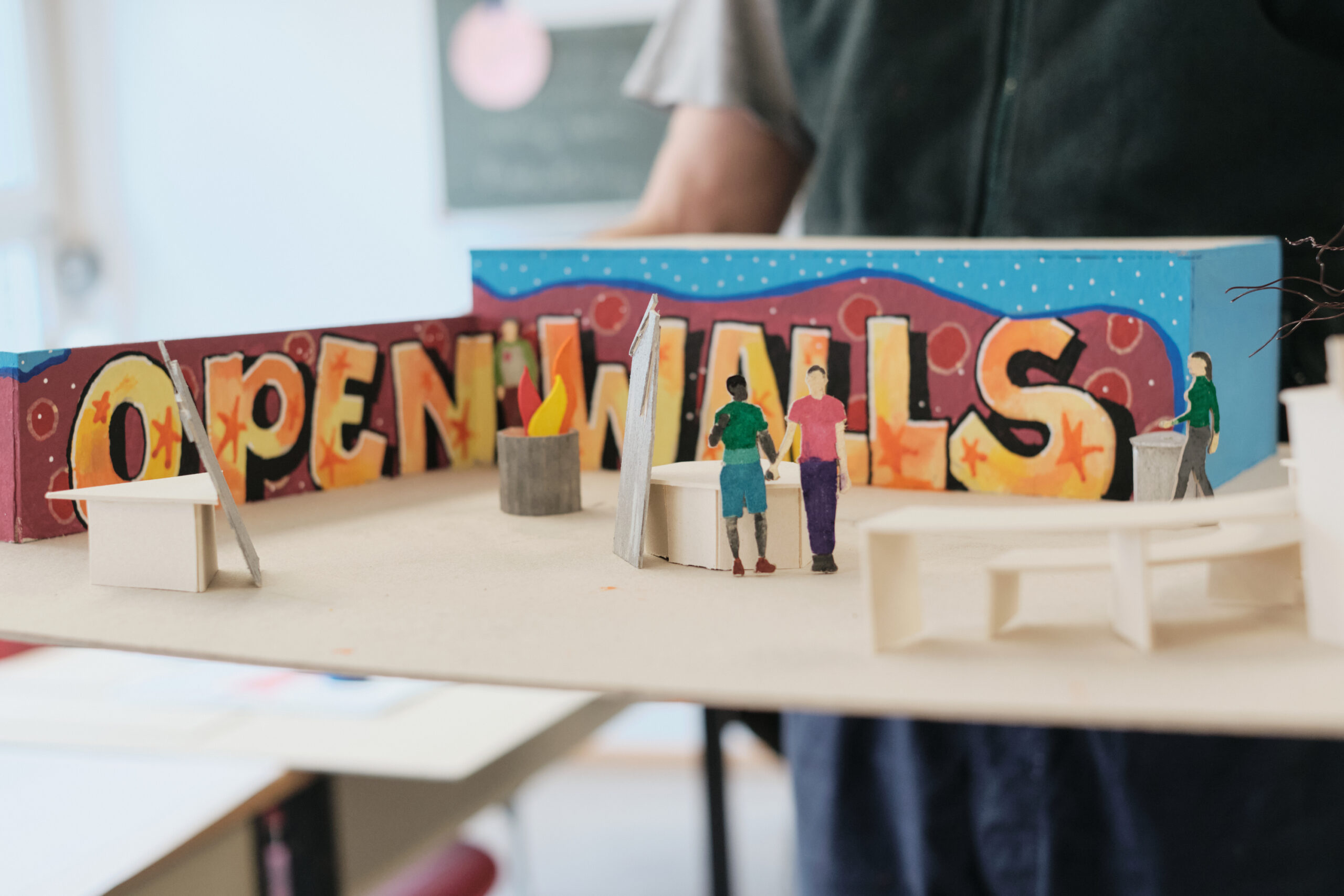
 Familienführung: Die Stadt ist der Sport – Städte in Bewegung: Beispiele aus ganz Europa15. March – 13:00 – 14:00Open Walls – Graffiti Workshop17. March – 15:00 – 17:30
-
-
-
- Collections
-
- The DAM
-

The DAM Preis 2025 goes to Peter Grundmann Architekten for the ZK/U Center for Art and Urbanistics in Berlin
DAM PREIS 2026
THE 23 BEST BUILDINGS IN\FROM GERMANY
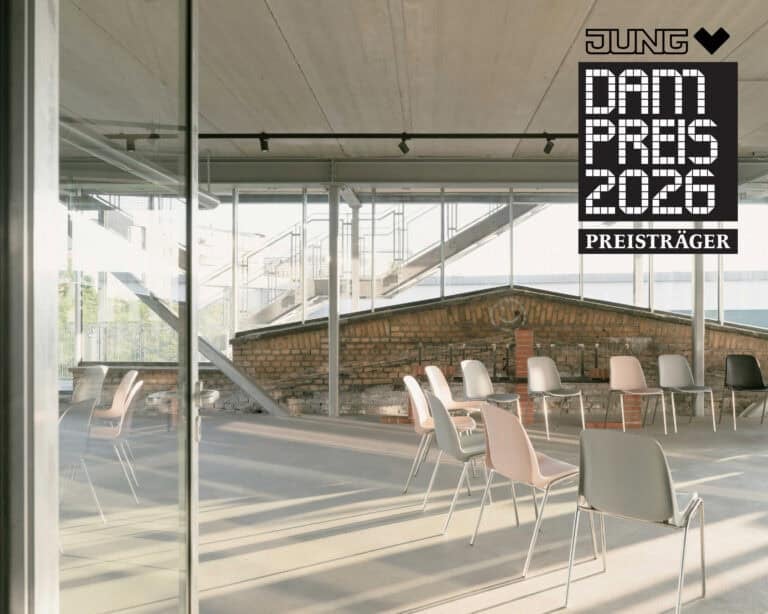
The DAM Preis 2025 goes to Peter Grundmann Architekten for the ZK/U Center for Art and Urbanistics in Berlin:
The jury was particularly impressed by the approach of transforming a former warehouse at a freight station into an inviting meeting place: Working closely with the non-profit association KUNSTrePUBLIK e. V., the team at Peter Grundmann Architekten used an above-average amount of manual labor and a modest (and adhered to!) budget to encase the former single-story hall in a lightweight steel and glass structure and add another floor. The rooms on all levels, including the vaulted cellar and roof terrace, can now be used flexibly. Architectural standards are being redefined or thrown overboard directly.
In 2026, the award will be bestowed by Deutsches Architekturmuseum (DAM) for the tenth time in close cooperation with JUNG as its partner – as part of a phased jury process.
THE LONGLIST
The museum nominated approximately 100 remarkable buildings or ensembles resulting from extensive research involving an advisory board of experts for the DAM Preis for Architecture in Germany. The board consisted of Ursula Baus, Christina Beaumont, c/o now, Lukas Fink, Florian Fischer, Florian Heilmeyer, Angelika Hinterbrandner, Christian Holl, David Kasparek, Katja Knaus, Moritz Kölling, Mario Krämer, Katharina Matzig, Eun-A Pauly, Elina Potratz, Jan O. Schulz, Something Fantastic, Heiner Stengel, Finn Warncke, Christian von Wissel and Uta Winterhager. Projects were also nominated by the chambers of architects of the states of Bavaria, Hesse, North Rhine-Westphalia, Rhineland-Palatinate, Saxony and Thuringia. In principle, there was no restriction as regards building typology, minimum size or construction sum for the nomination of the buildings. The buildings nominated for the DAM Preis 2026 had to have been completed between the end of 2023 and the spring of 2025.
Since 2017, the prize has also involved all buildings on the longlist being presented in geographical order annually in the Architekturführer Deutschland. The 2026 edition, published by DOM publishers, is already on sale. At the same time, you can also browse the longlist on the Internet at dam-preis.de. Over the years, a digital archive of remarkable buildings in Germany will be created.
THE SHORTLIST
A jury of experts chaired by architect Aline Hielscher selected 21 projects from the longlist for the shortlist for the DAM Preis 2026. A selection of two buildings designed by German architects and erected outside the country and the renovation and expansion of the Gründervilla JUNG were also included for consideration out of competition. A constant also in 2026 is the high proportion of residential buildings, often with the re-conception of conventional floor plans for changing lifestyles. A trend is continuing in cultural buildings: the priority is no longer to place spectacular solitary structures in (urban) spaces, but to create “third places” with an expanded range of offerings. In addition, the importance of two key themes is confirmed: the number of timber and timber hybrid buildings is increasing, as is the significance of continued construction in combination with renovations and conversions. The latter is also popular as a way of turning neglected town centers back into popular and lively meeting places.
THE FINALISTS
In the course of a special jury trip the jury inspected the five building ensembles chosen as the finalists:
ARETZ DÜRR ARCHITEKTUR – Wohnen F // 9, Modular densification, Cologne
ETAL. – Das robuste Haus – Multi-generational house Görzer128, Munich
HILD UND K ARCHITEKTEN – Overnight shelter with medical facilities, Munich
PETER GRUNDMANN ARCHITEKTEN – ZK/U Center for Art and Urbanistics, Berlin
PPAG ARCHITECTS – Dual-school Allee der Kosmonauten, Berlin
BUILDINGS OUTSIDE GERMANY
Not included in the shortlist for the DAM Preis, but for many years a firm part of this overview of contemporary German architecture, are buildings designed by German architectural practices located in other countries: This time they are located in Austria and South Korea. Peter Haimerl . Architektur and Studio Clemens Bauder have added an airy pavilion with a canopy-like roof to Linz Cathedral, which serves as a café and a barrier-free welcome gesture. In an up-and-coming district of Seoul, behet bondzio lin architekten have created W-Mission Headquarters, a striking location for a textile company combined with cafés, pop-up stores, offices, a community hall, and residential space.
DAM PREIS 2026 – PRIZE WINNER
PETER GRUNDMANN ARCHITEKTEN
ZK/U Center for Art and Urbanistics
This unusual building unites creative will and ability, attitude and design. It was preceded by the founding of the association KUNSTrePUBLIK in 2012, which established a broad programme in a vacant freight station in Berlin-Moabit ranging from public viewings to repair workshops and neighbourhood markets to exhibitions, performances, and artist residencies. An extension became necessary. After the approval of six million euros in funding, the Berlin firm Peter Grundmann Architekten emerged successfully from a Europe-wide tender process in 2019.
Careful assembly
The building is finely and carefully assembled. Loads are visibly and legibly transferred to new columns. Old walls that are no longer load-bearing were allowed to remain standing. The existing structure overall remained unchanged. The most complex façade connections were not left to construction companies by the trained shipbuilder Peter Grundmann, but built by himself. Also to save costs – which amount to only around 2,000 euros per square meter.
Ephemeral spatial layer
The old storage hall on the ground floor was left standing as a shell and defines the event space. Below it is an atmospheric vaulted cellar with exhibition space and bar. The existing structure is enveloped by an ephemeral second spatial layer of glass and very little steel. This envelope serves as thermal protection and meets energy requirements even without insulation. On the entrance side it forms the foyer and windbreak. On the garden side it is six meters deep and accommodates a space with a bar. The new second floor rests on a prestressed slab. The recessed façades provide sun protection. Additionally, a wide access gallery was created that provides access to all rooms and thus enables great flexibility of use in the interior as well. Surrounding steel staircases lead upward and connect both levels to the large roof terrace.
The ZK/U is embedded in a public park, which the association maintains. Architecture redefined The building is convincing architecturally and spatially as well as structurally and aesthetically. It demonstrates that honest, haptic construction and economical planning need not be contradictory – but rather complement each other to redefine great architecture.
(Original text: Peter Cachola Schmal)
Furher Information: www.dam-preis.de